


Choosing among the three types of sentences and using them fluently in their writing is a goal that middle-grade students will be tackling from time to time throughout their upper elementary and middle school careers. It’s one of those skills that kids tend to think they already know, but really need to practice.
Like it says in the Common Core Standard, choosing among simple, compound, complex, and compound-complex sentences signals differing relationships among ideas (L7.1b), and that is a pretty advanced topic for middle-graders!
As with other language skills, mentor sentences, notes that students can refer back to as needed, and direct practice are three things that can be really helpful before the students start trying to be selective about the sentence types in their own writing.
For mentor sentences, my all-time favorite source is picture books! There are so many great ones that appeal to middle-grade kids, and they are a breeze to work into a lesson. I’ll write more about using mentor sentences from picture books in another post.
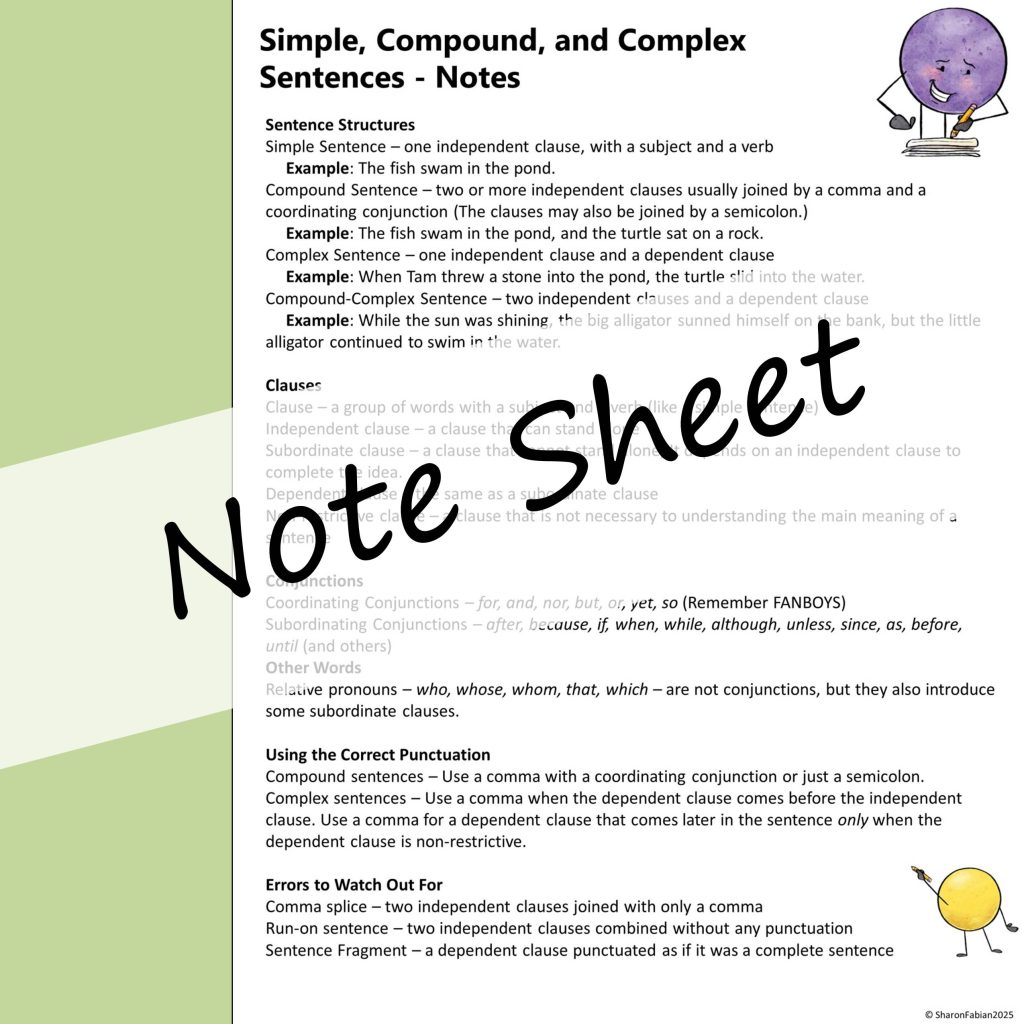
Notes on this topic for their notebooks can be pretty simple but should include information about clauses, conjunctions, and punctuation, in addition to the types of sentences.
Here you can see what I included in my note sheet.
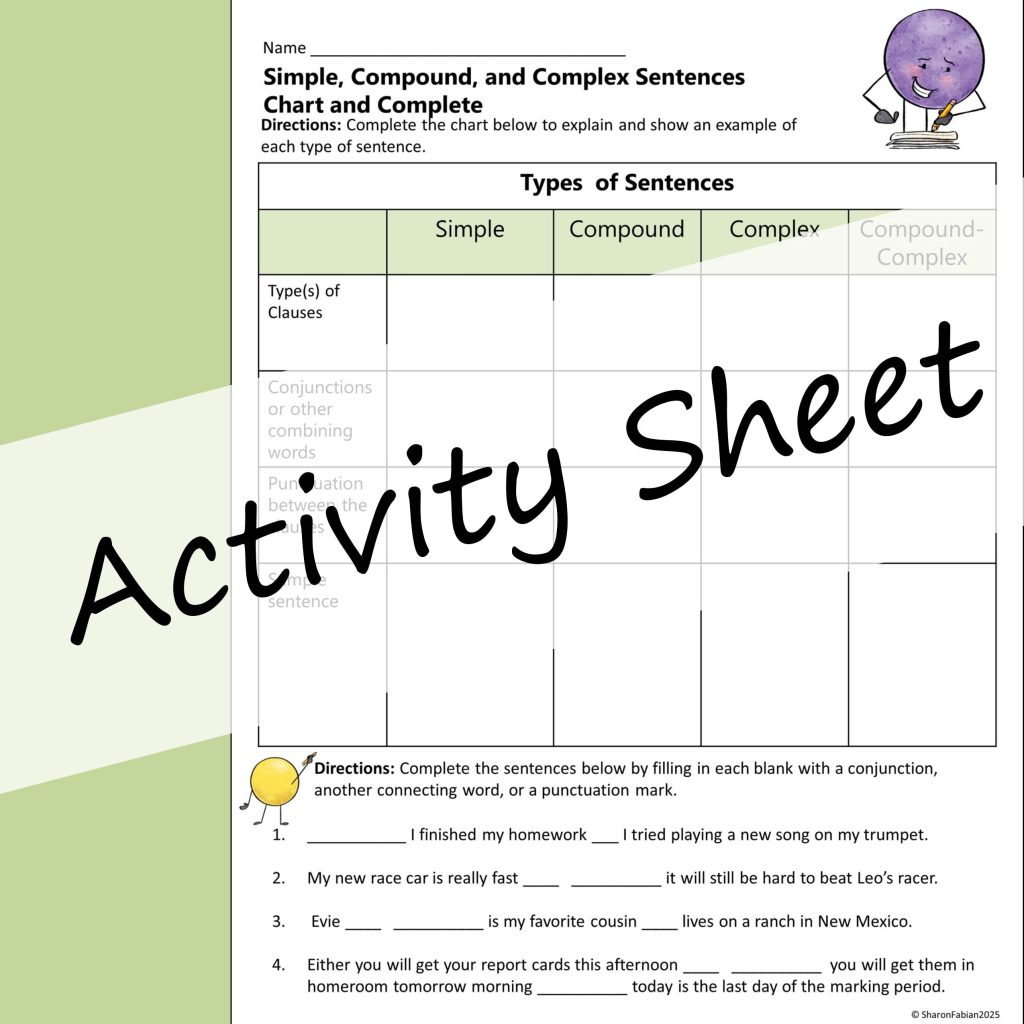
For direct practice, there are a few types of activities that I often use. One is a chart that the students fill in with examples. My chart for this topic has spaces under each type of sentence for the types of clauses it includes, conjunctions that may be used, punctuation, and sample sentences. These little charts are good for students to keep in their notebooks as well to refer to as needed.
For the rest of the practice activities, I like a mix of short assignments that includes multiple choice, fill-ins or other quick answers, proofreading, and questions in which students write out their own answers. These are the ones that I chose for my Simple, Compound, and Complex Notes and Practice.
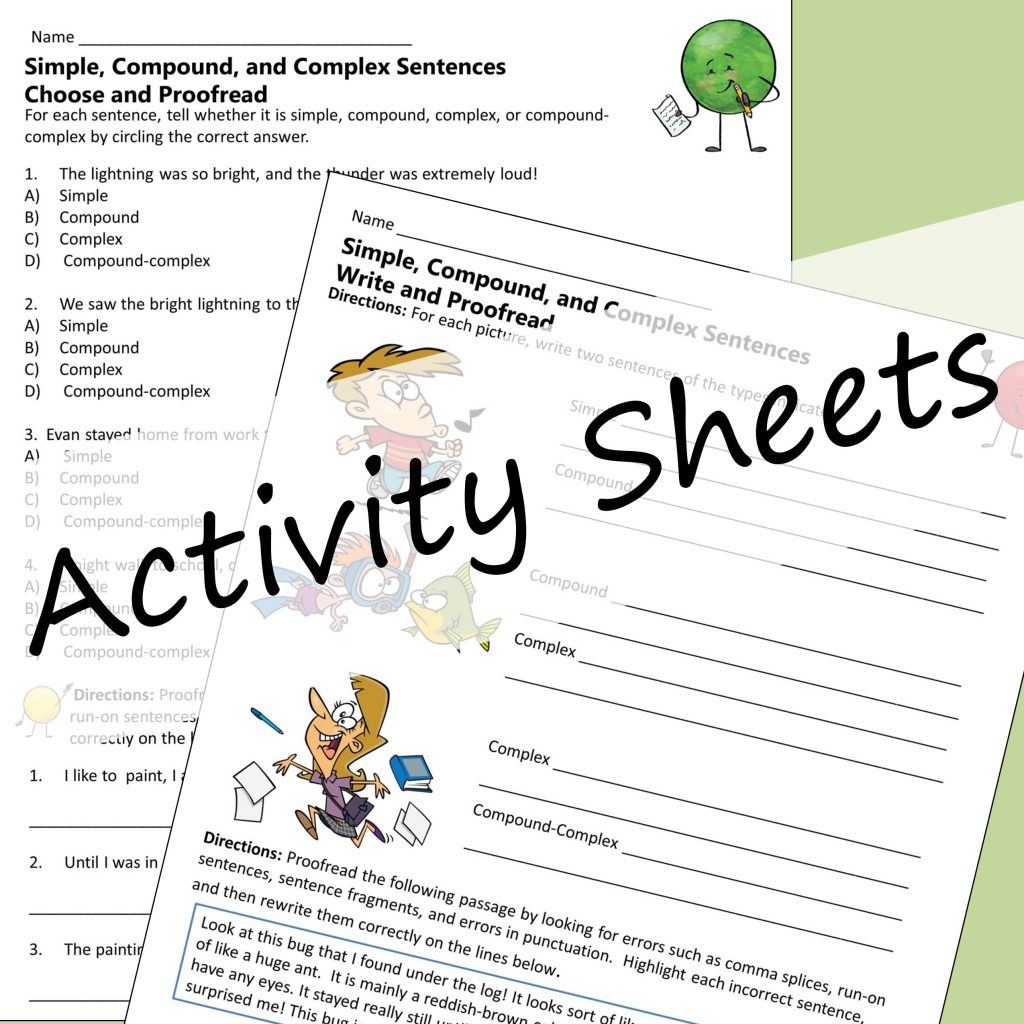
For the exercise in which students write their own sentences, I chose funny clip-art pictures as the prompts for single-sentence writings for this topic. Another choice that I like for prompts for short practice writings is photos, which are definitely easy to find now (or you could use photos supplied by the students to add a whole new, fun element to the writing assignment).
One teacher said, “Students MUST learn, understand, and apply clauses to write well. This is an excellent resource with practice that students desperately need at many grade levels.”
This resource, Simple, Compound, and Complex Sentences – Notes and Practice, is one of a series of short resources that I’m working on, with each one focusing entirely on a single objective from the language arts standards. The others that I’ve done so far (more to come) are all in my store under the “Notes and Practice” heading. They are:
- Dangling and Misplaced Modifiers (L7.1c)
- Phrases and Clauses (L7.1a)
- Pronoun Case (L6.1a)
- Vary Sentence Patterns (L6.3a)
- Punctuating Nonrestrictive Elements (commas, parentheses, and dashes) (L6.2a)
- Perfect Verb Tenses (L5.1b)
- Progressive Verb Tenses (L4.1b)
Some of these topics are surprisingly complex, especially for middle graders, but sometimes for adults (including teachers!) too. I hope that you will find my Notes and Practice resources helpful!
Related Posts