


Putting words together to form sentences and revising sentences to make just the right impression are such essential skills that it is no surprise that they recur throughout the curriculum, not just for upper elementary and middle school students, but for years before and after that as well!
But even though college-level sentence revision and kindergarten-level sentence creation are definitely interesting topics, I’ll stick to my usual upper-elementary and middle-school levels for the moment.
Constructing Sentences
I’ll start with the basics – subjects and predicates, nouns and verbs. To make it interesting, there is a lot more you can do with subjects and predicates beyond having kids identify them in sentences and making sure their own sentences have one of each.
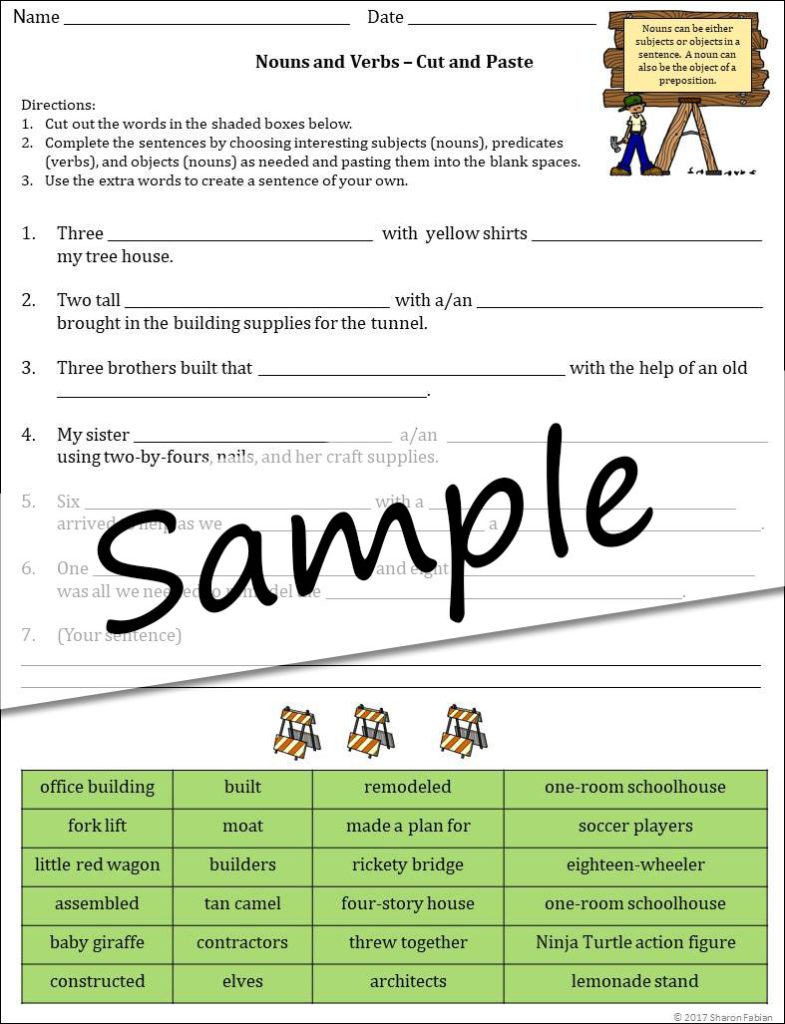
Activities such as choosing from a word bank, replacing nouns or verbs in a sentence, or filling in blanks in sentences with their own word choices move subject-verb assignments from basic grammar exercises into creative writing exercises in miniature. Here is a worksheet on nouns and verbs from my Writing and Revising Sentences Package. In this one, students cut and paste to add words from a word bank of interesting nouns and verbs to complete the sentences.
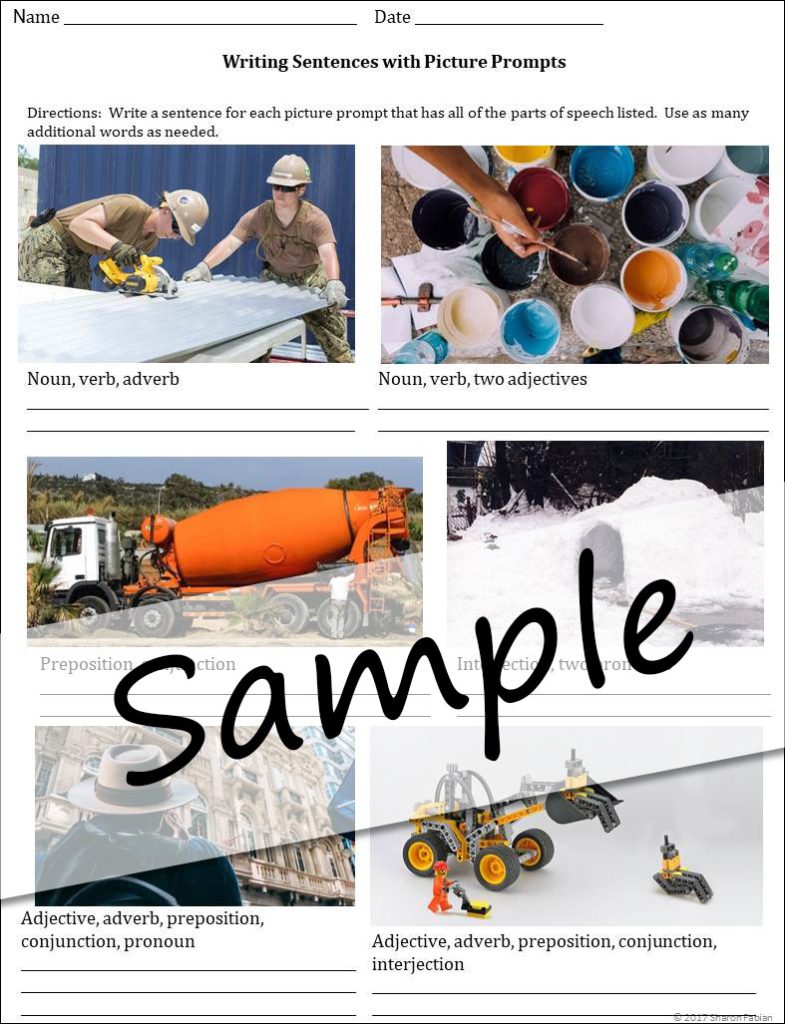
Students can be encouraged to write longer or more complex sentences with assignments that direct them to include specific parts of speech in their sentences. Including adjectives and adverbs will add details to their basic statements, and including either coordinating or subordinating conjunctions will lead them to writing compound and complex sentences. Students can also be directed to include pronouns to avoid repeating the same noun over and over.
This activity provides pictures for students to write about, with directions to include particular parts of speech in each sentence.
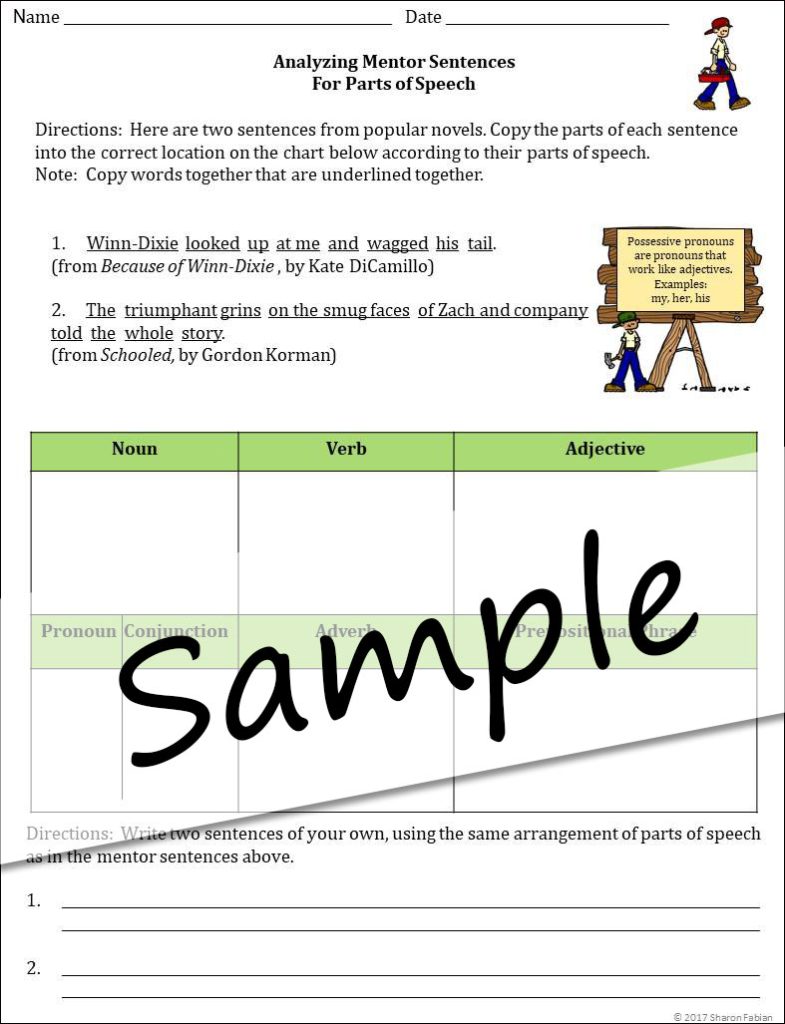
Another interesting way for kids to practice constructing sentences is by following examples. Great examples can be found in all types of children’s literature. Picture books are one of my favorite sources of mentor sentences, and novels are another. This short activity provides two mentor sentences – one from Because of Winn-Dixie and one from Schooled. First, the students analyze each one by parts of speech, and then they write sentences of their own following the same pattern.
Renovating Sentences
For revising or improving their sentences, looking at the parts of speech is also a good place to start. Adding descriptive words, adjectives or adverbs, is possibly the most common method of revising at this grade level.
Once kids are comfortable with adding words to their sentences, they can progress to adding more involved elements such as phrases and bits of figurative language.
Students can also practice combining short sentences into a bigger and better one using both types of conjunctions. They can easily remember the coordinating conjunctions using the acronym FANBOYS (for, and, nor, but, or, yet, so). For subordinating conjunctions, since there are so many, I like to start with a few, and then have the kids brainstorm others that they could also use.
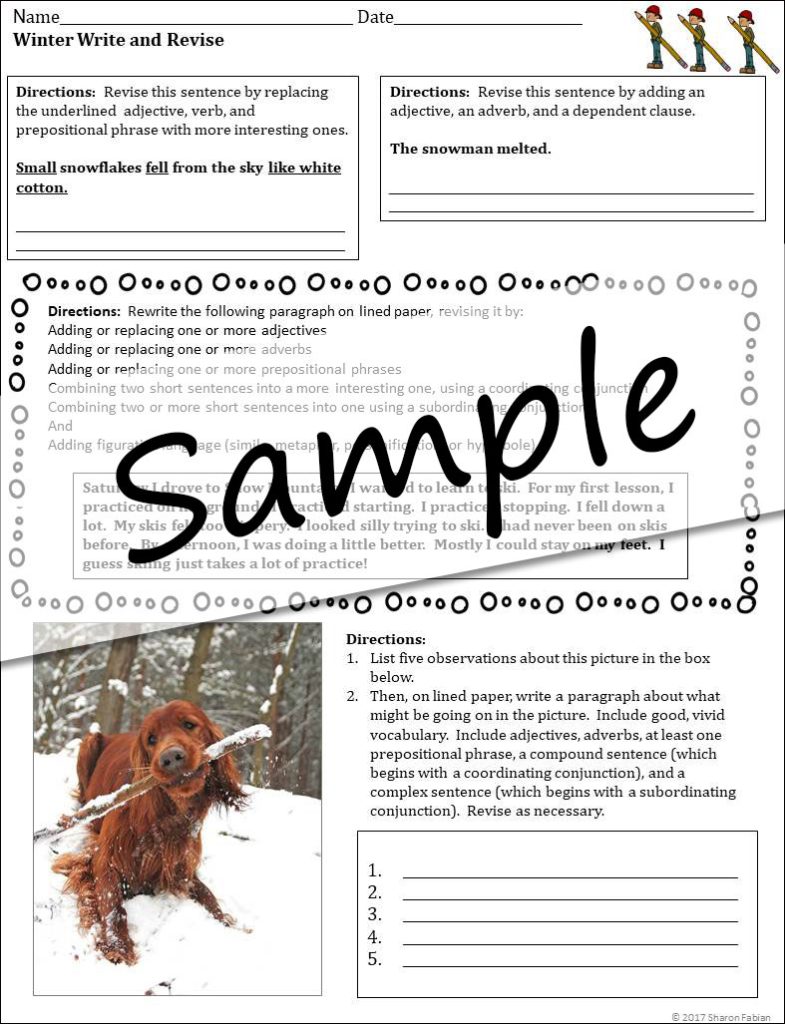
After they have got the hang of combining sentences and adding parts, kids can move on to revising by replacing words, phrases, or clauses in their sentences with more interesting ones, such as in this winter activity sheet. I’ve included one for each season in my activity sheet set since this is definitely a skill that can be practiced throughout the year.
Fun and Games
I’ll just mention two activities that I designed especially for classroom fun! One is a set of game questions – you can use them for a Jeopardy-style game or any type of question-and-answer classroom game that your kids enjoy. There are two pages of these game questions in the Sentence Remodeling section of this resource.
The other one is “refrigerator magnets,” with words for kids to cut out and use to create sentences. Here is a picture.
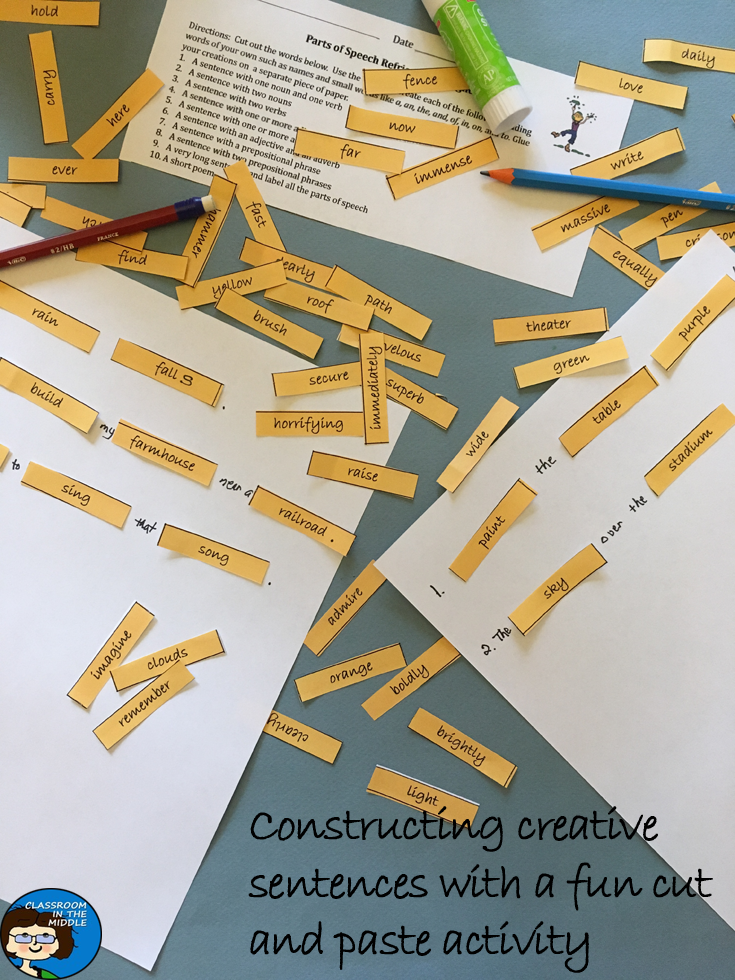
An interesting follow-up to this activity might be to have kids create magnets of their own, maybe to exchange with a partner. Or maybe they could work in groups, with each group assigned to brainstorm lots of interesting words using just one part of speech. All of the words could then be posted onto a giant word wall of interesting words to use in future writings whenever they might come in handy.
Between the slide presentation and the 24 (!) activities that I fit into the activity packet, I think you will find plenty to keep your kids practicing and engaged with writing great sentences! Or, if you would rather make your materials on your own or with your kids, go ahead and try out some of the ideas straight from this post – whatever works for you!